Red Light Therapy in Vancouver, Washington
Reduce pain. Improve skin. Support metabolism. Backed by science and delivered in a clinical setting.
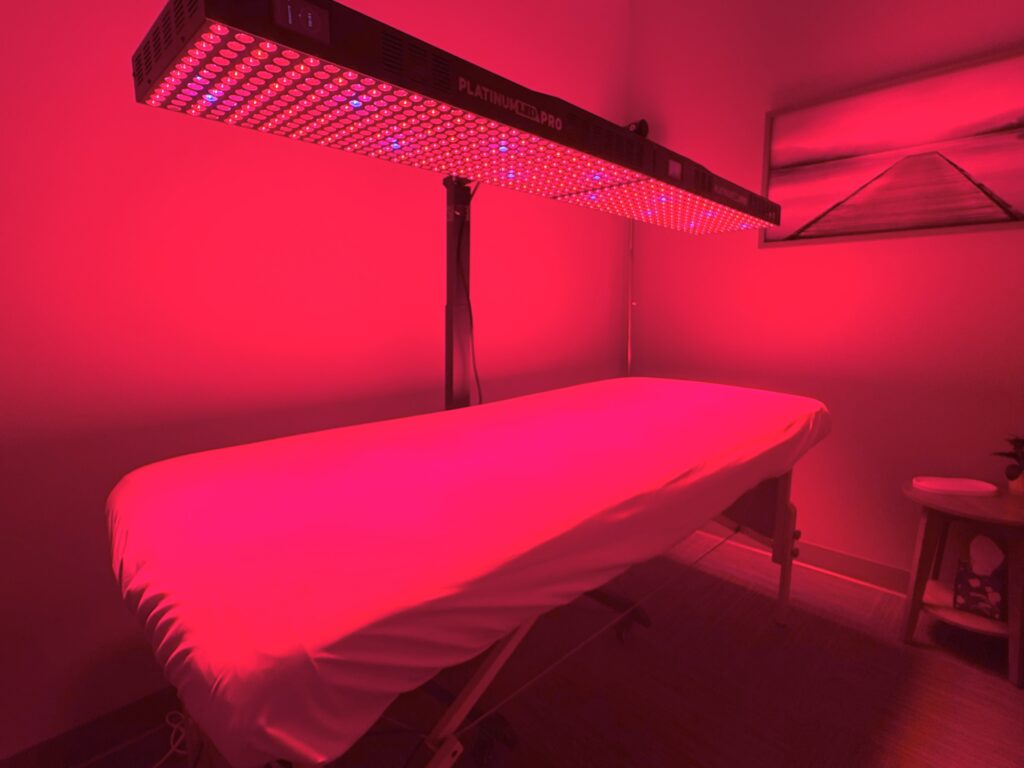
At Prevail Wellness Center, we use medical-grade red light therapy to support healing at the cellular level. This treatment helps reduce inflammation, improve circulation, and enhance mitochondrial function, which can lead to faster recovery, healthier skin, and better overall energy.
Patients commonly use red light therapy for joint and muscle pain, skin rejuvenation, injury recovery, and ongoing inflammation or fatigue. Whether you are dealing with chronic discomfort or simply looking to support your body’s performance and recovery, this therapy is designed to help you feel and function better.
What makes our approach different is that this is not a spa service. Your treatment is delivered in a medical setting and can be tailored to your specific goals. Red light therapy can also be integrated with other treatments we offer, including hormone & thyroid optimization and weight loss support, allowing for a more comprehensive and effective plan.
Red light therapy may be right for you if
Common Conditions We Treat With Red Light Therapy
- You want to support thyroid function, metabolic health, or hormonal balance
- You want to improve metabolic health and target abdominal weight gain
- You have chronic pain, joint inflammation, or muscle soreness that is not resolving
- You are recovering from an injury, surgery, or orthopedic procedure
- You feel fatigued or have low energy even with adequate sleep and nutrition
- Your skin shows signs of aging, sun damage, acne, or slow wound healing
- You have been diagnosed with neuropathy, tendinopathy, or inflammatory conditions
Red light therapy is appropriate for a wide range of patients. During your consultation, we evaluate your health history, goals, and current symptoms to determine the optimal wavelengths, dosing protocol, and treatment frequency for your specific needs.
The Science of Photobiomodulation
How Red Light Supports Cellular Repair
Red light therapy (also called photobiomodulation or PBM) uses specific wavelengths of red and near-infrared light to penetrate the skin and reach your cells. These wavelengths interact with the mitochondria, which are responsible for producing energy in the body.
When stimulated, the mitochondria increase production of ATP, the primary energy source for your cells. This increase in cellular energy helps your body repair tissue more efficiently and function at a higher level.
At the same time, red light therapy helps reduce inflammation, improve circulation, and support healthy cellular signaling. The result is faster recovery, reduced pain, improved skin health, and better overall resilience.
The Research Behind Red Light Therapy
Clinically studied. Widely used. Proven to support recovery.
Red light therapy, also known as photobiomodulation, is one of the most researched non-drug therapies for pain, inflammation, and tissue repair.
Clinical studies have shown that red and near-infrared light can help reduce musculoskeletal pain, improve circulation, support collagen production, and accelerate healing.
It has also been studied for its effects on skin health, recovery after exercise, and nerve-related conditions, with a strong safety profile when used appropriately.
This growing body of research is why red light therapy is widely used in both rehabilitation and integrative medical settings.
Mitochondrial Energy (ATP)
Increases cellular energy to power repair and recovery
Red light therapy stimulates your mitochondria to produce more ATP, the energy your cells use to function. Higher cellular energy supports faster healing, reduces fatigue, and improves overall recovery.
Anti-Inflammatory Effects
Reduces inflammation and supports pain relief
Red and near-infrared light help regulate inflammatory pathways by lowering pro-inflammatory signals and supporting anti-inflammatory responses. This can reduce pain, stiffness, and chronic inflammation throughout the body.
Nitric Oxide & Circulation
Improves blood flow and oxygen delivery to tissues
Red light therapy helps release nitric oxide, which relaxes blood vessels and improves circulation. This increases oxygen delivery to tissues, supporting faster healing, reduced swelling, and better vascular health.
Collagen & Skin Regeneration
Supports collagen production and healthier skin
Red light therapy activates fibroblasts, which produce collagen and elastin. This helps improve skin texture, elasticity, and tone while supporting wound healing and reducing visible signs of aging.
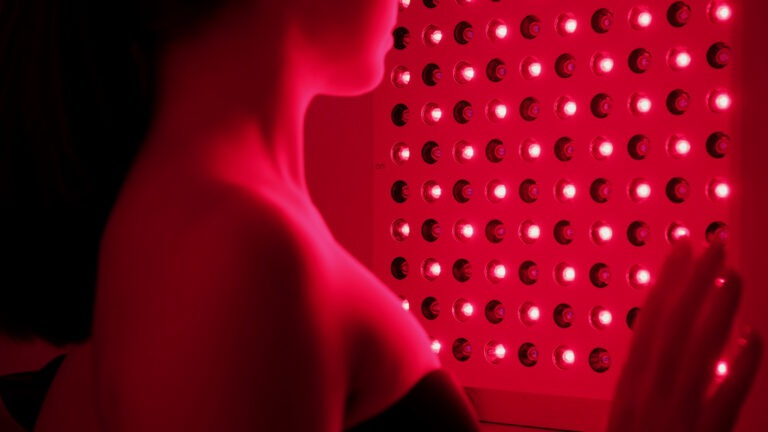
Smart Therapy Protocols:
Anti-Aging - $25
10 minutes: Red, near-infrared, and blue light at 50% power
Designed for comprehensive skin rejuvenation. This protocol activates fibroblasts — the cells responsible for producing collagen and elastin — to improve skin texture, tone, and firmness. Best for patients focused on visible signs of aging, sun damage, or overall skin quality.
Skin Repair & Recovery - $35
15 minutes: Red and near-infrared at 60%, blue light at 100%
Targets surface skin concerns with a higher concentration of blue light, which has direct antibacterial properties. Effective for hormonal acne, hyperpigmentation, post-procedure healing, and rosacea support. Use on clean, dry skin for best results.
Mood/Wellness - $45
15 minutes: Full spectrum at moderate output
Supports mitochondrial energy production and healthy neurotransmitter function. Regular sessions have been associated with improved mood, reduced stress response, and better daytime energy — particularly relevant during perimenopause and menopause when energy and mood fluctuations are common.
Deep Tissue - $45
20 minutes: Red and near-infrared at 100% power
Full-power output designed to penetrate deep into muscle, joint, and connective tissue. Near-infrared wavelengths at 850nm and 1060nm reach two to three inches below the skin surface, reducing inflammatory markers and supporting tissue repair. Best for joint pain, arthritis, muscle soreness, and injury recovery.
Metabolic - $45
20 minutes: Red and near-infrared at 100% power
Designed to support metabolic health at the cellular level. Emerging research suggests near-infrared light improves mitochondrial efficiency and insulin sensitivity, making this protocol a useful adjunctive tool for patients working on body composition, blood sugar regulation, and metabolic optimization.
Sleep Support - $55
30 minutes: Red and near-infrared gradually decreasing from 20% to 0%
The only protocol with a built-in fade feature. Light output decreases gradually over 30 minutes, mimicking the body’s natural transition toward rest. Supports cortisol regulation, nervous system downregulation, and melatonin onset. Effective for stress recovery and sleep quality improvement any time of day.
Workout - $55
30 minutes: Red and near-infrared at 100% power
Full-power output optimized for athletic performance and recovery. Use before exercise to prime muscles and improve circulation, or within two hours after exercise to reduce delayed onset muscle soreness, clear lactate, and support tissue repair. Ideal for patients with active lifestyles or physical rehabilitation goals.

Ready to Start Feeling Better With Red Light Therapy?
Your treatment is guided by clinical protocols and customized to your specific needs for optimal results.
Frequently Asked Questions About Red Light Therapy
Is red light therapy the same as infrared sauna?
No. While both use light energy, they work differently. Infrared saunas primarily generate heat to induce sweating and relaxation. Red light therapy (PBM) delivers specific wavelengths of non-thermal red and near-infrared light that are absorbed by mitochondria to stimulate cellular processes — without significant heating of the tissue.
How many sessions will I need?
It depends on your condition and goals. Most patients see initial results within 4–8 sessions. For acute injuries, 8–12 sessions over 3–4 weeks is typical. For chronic conditions, skin health, or metabolic support, ongoing maintenance sessions (1–2 per week) are often recommended. We set expectations during your initial evaluation.
Does red light therapy have any side effects?
Red light therapy has an excellent safety profile and is FDA-cleared for several indications. When applied correctly, it is non-toxic and non-thermal. Rarely, patients report mild transient fatigue or localized warmth. We do not apply PBM over active malignancies, directly to eyes without protection, or to patients taking photosensitizing medications without medical review.
What wavelengths do you use and why does it matter?
We use red light (630–670 nm) for superficial targets such as skin, wounds, and surface musculature, and near-infrared light (810–850 nm) for deeper tissue penetration — reaching joints, tendons, and deeper muscle groups. The appropriate wavelength depends on your anatomy and treatment goal. Using incorrect wavelengths reduces efficacy.
Is this covered by insurance?
Red light therapy is not covered by standard insurance as it is classified as an integrative or wellness service in most plans. We provide transparent pricing and can discuss package options during your consultation. Some health savings accounts (HSAs) or flexible spending accounts (FSAs) may cover PBM — check with your plan administrator.
Can red light therapy help with hormonal or metabolic issues?
Emerging research suggests PBM may support thyroid function by improving mitochondrial activity in thyroid tissue, and may benefit metabolic health through improved cellular energy utilization and reduced systemic inflammation. We integrate PBM as a complementary tool within a broader hormonal and metabolic treatment plan at Prevail.
How is Prevail's approach different from home devices?
Consumer-grade red light devices vary widely in power density, wavelength accuracy, and build quality. Many deliver sub-therapeutic irradiance or lack the near-infrared spectrum required for deep tissue effects. Our clinical-grade equipment delivers precise, measured doses under medical supervision, with protocols tailored to your condition rather than a generic preset.
Can I combine red light therapy with other treatments?
Yes, and we often recommend it. PBM pairs well with physical therapy, IV nutrient therapy, hormone optimization, peptide therapy, and exercise protocols. We design your treatment plan so these therapies complement rather than conflict with each other, optimizing your outcomes efficiently.
Who is NOT a good candidate for red light therapy?
Red light therapy is contraindicated in patients with active cancer at the treatment site, pregnancy over the abdomen or low back, epilepsy triggered by light, or those taking high-dose photosensitizing medications (e.g., certain antibiotics, psoralens). We screen all patients thoroughly at intake to ensure safety before initiating treatment.
Ready to Feel Like Yourself Again?
If you are experiencing chronic pain, low energy, slow recovery, or skin concerns and want evidence-based, non-invasive treatment, we are here to help. Our Vancouver, WA team provides thorough evaluations and personalized red light therapy protocols designed around your specific goals and health history.